 Plan a journey
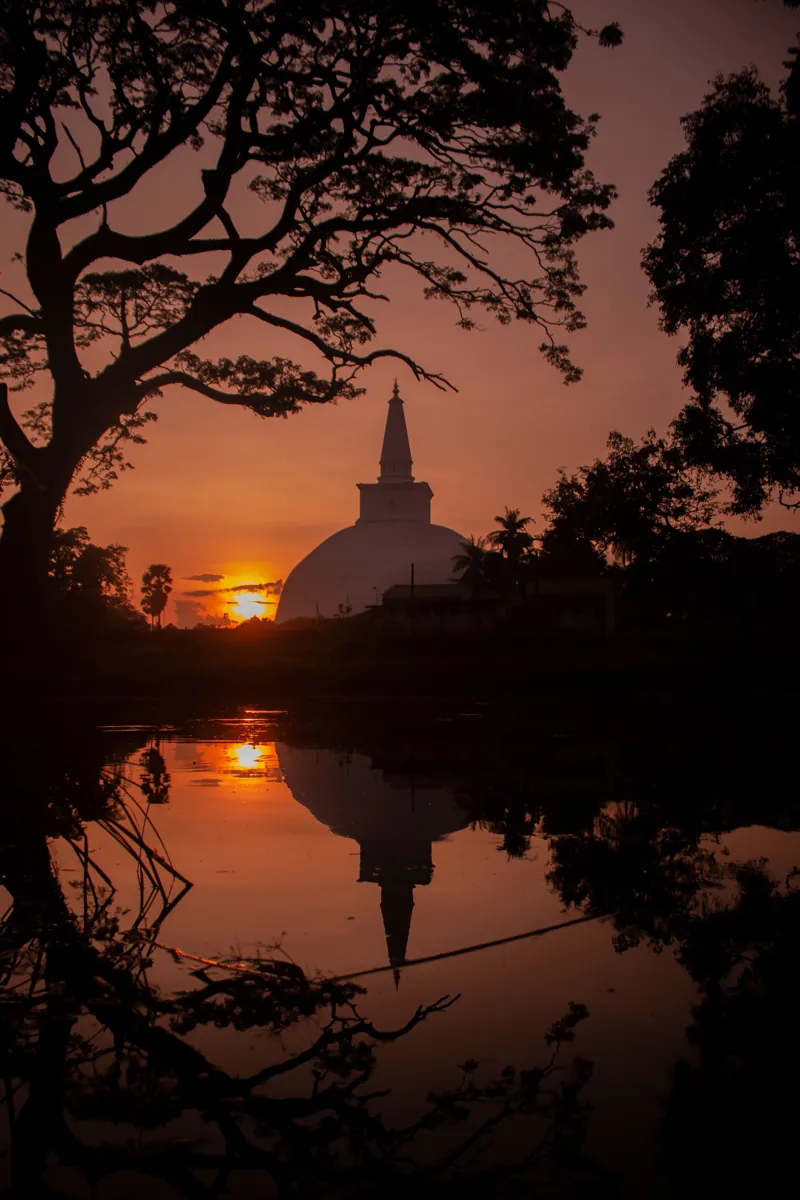
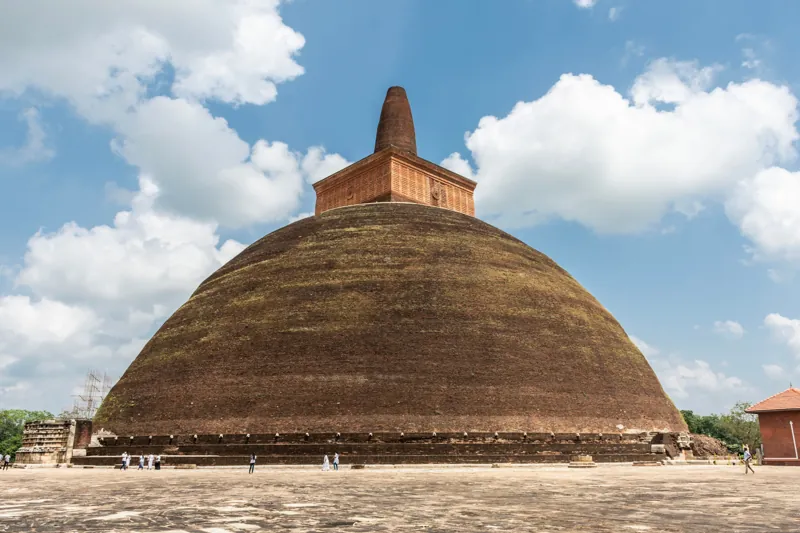
For over a thousand years Anuradhapura was the heart of Sinhalese civilisation. Brick stupas the size of hills, sacred bathing pools and a fig tree grown from the Buddha's own Bodhi tree still draw pilgrims dressed in white.
History
Anuradhapura became a royal capital in the fourth century BCE and stayed one until the late tenth century CE. Through this whole period it was one of the great cities of South Asia. Its kings built vast reservoirs ('wewas') and canals that let farming flourish in the dry plains, and some are still used today.
In the third century BCE, a sapling of the Bodhi tree from Bodh Gaya in India, the tree under which the Buddha attained enlightenment, was planted here. The Sri Maha Bodhi is thought to be the oldest human-planted tree with a recorded planting date. Over the centuries the city's monasteries became important centres of Buddhist learning. Chola invaders sacked the city around 993 CE and the capital moved to Polonnaruwa. UNESCO listed the sacred city in 1982.
Culture & meaning
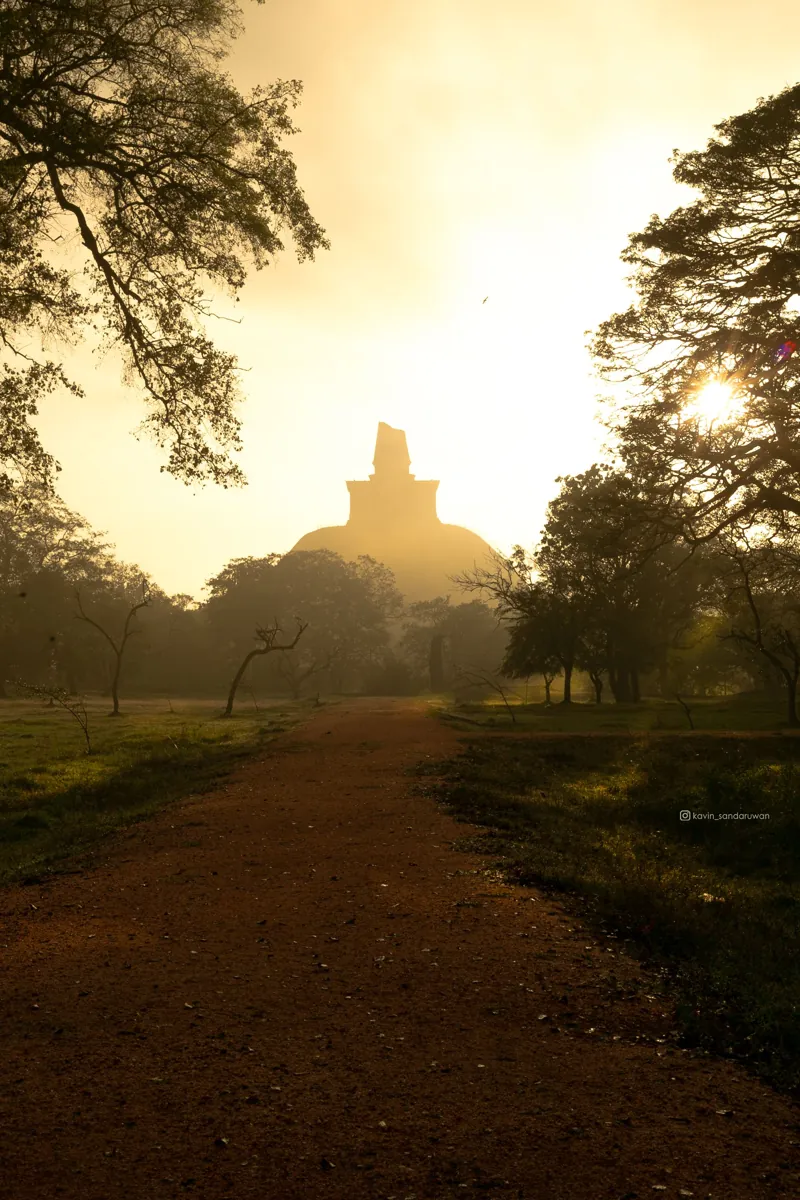
Anuradhapura is a living sacred city. Pilgrims in white bring flowers and walk clockwise around the gleaming Ruwanwelisaya stupa. The Jetavanaramaya, built in the third century CE, was once among the tallest structures in the ancient world. The Thuparamaya is traditionally regarded as the first stupa built after Buddhism arrived on the island.
At Isurumuniya rock temple, look for the delicate carving known as 'The Lovers', one of the finest examples of early Sinhalese art.
Travel notes
- Wear white or light, modest clothing. You will go barefoot at the stupas, so visit early before the stone heats up.
- The site is spread out, so a bicycle or tuk-tuk is the best way to get around.
- Full-moon (Poya) days are especially atmospheric but crowded. Alcohol is not sold on Poya days.