 Plan a journey
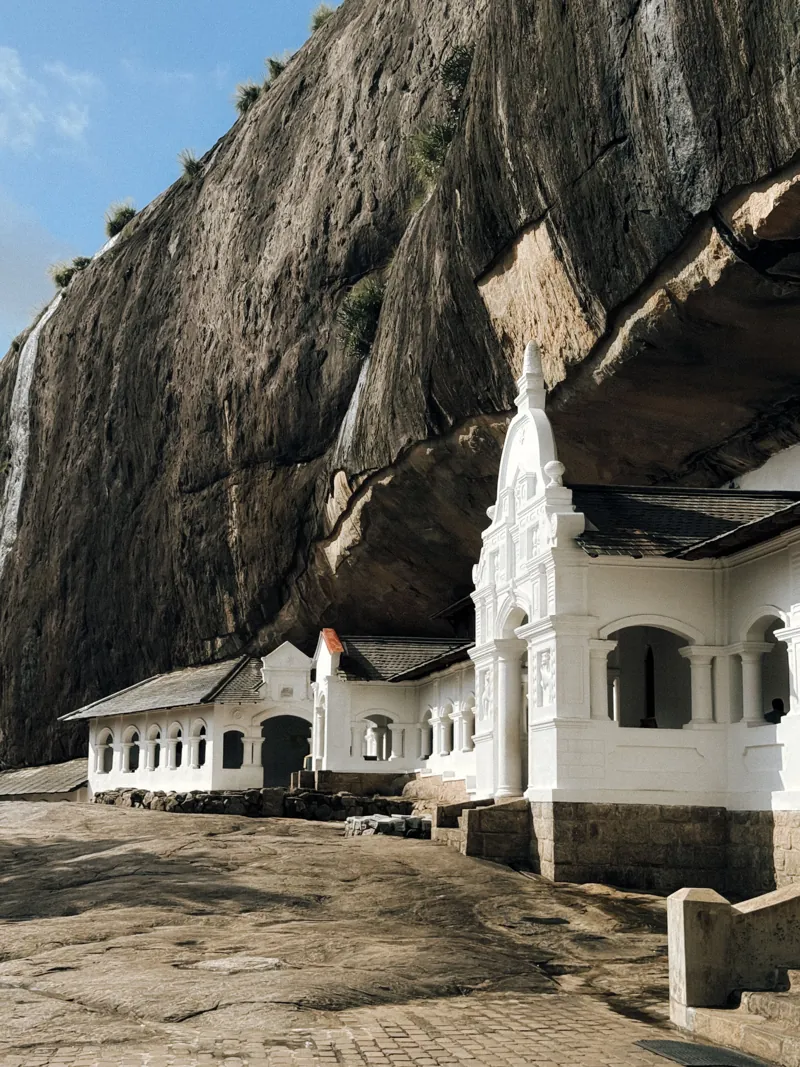
High on a granite outcrop, five cave shrines glow with painted ceilings and rows of Buddha statues. It is the largest and best-preserved cave temple complex in Sri Lanka, and monks have used it for more than two thousand years.
History
Monks lived in the caves of this rock long before the temple took shape. According to tradition, King Valagamba hid here in the first century BCE after invaders drove him out of Anuradhapura. When he won back his throne, he turned the caves into a temple to give thanks.
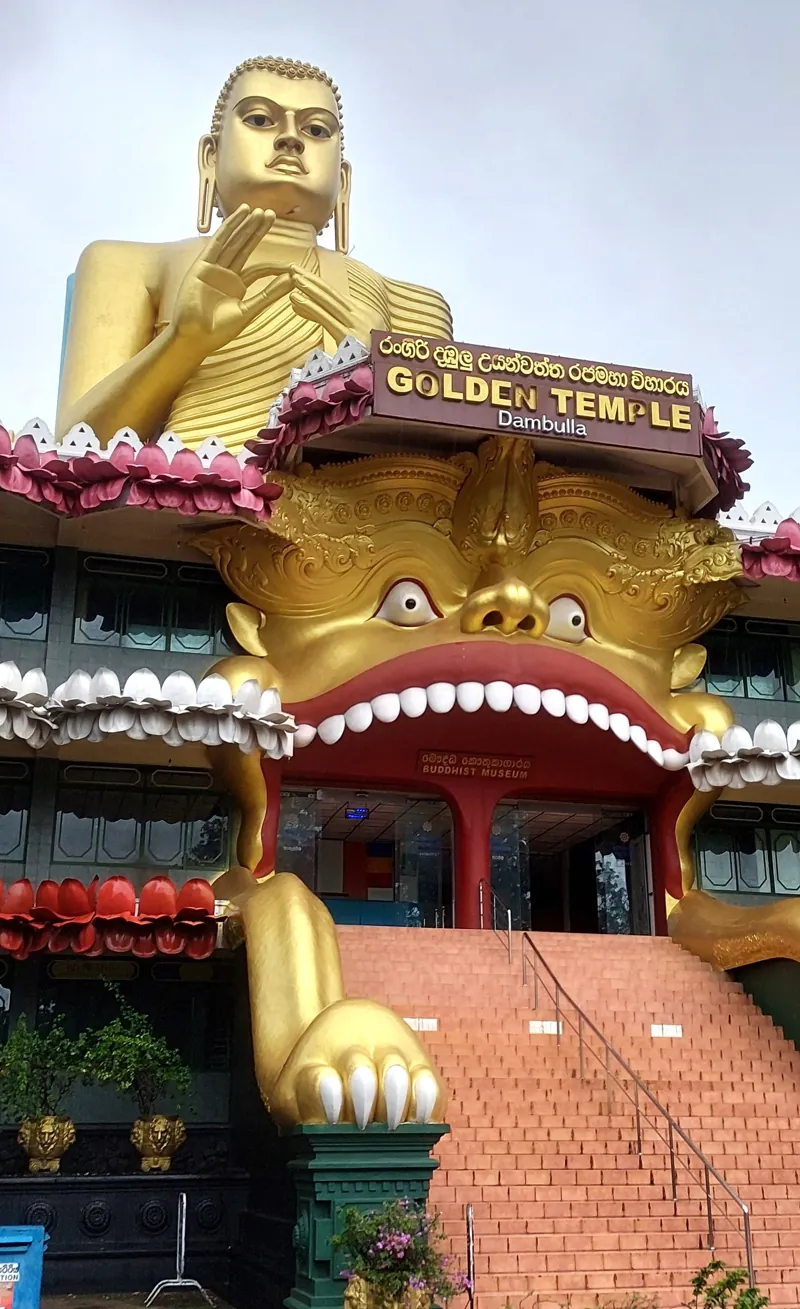
Later kings added to the shrines over the centuries. The Kandyan kings of the eighteenth century repainted the interiors in the style still seen today. UNESCO listed the site in 1991 as the Golden Temple of Dambulla.
Culture & meaning
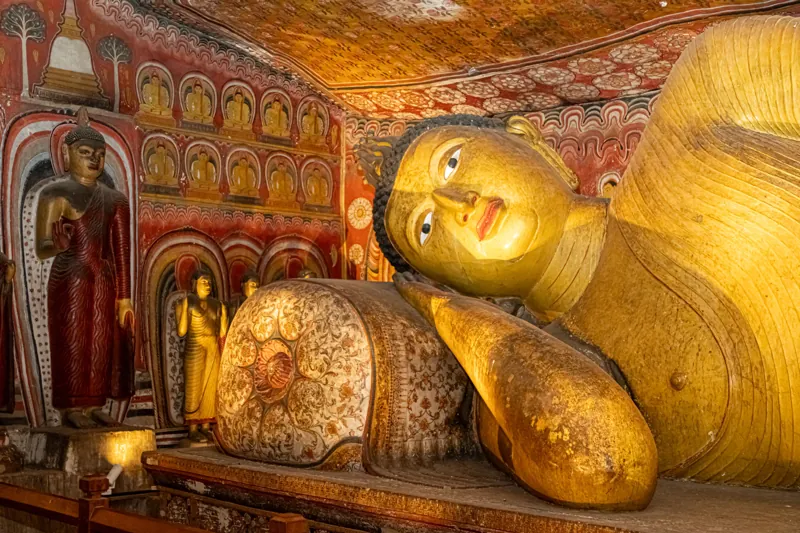
The caves hold more than 150 images of the Buddha, along with statues of kings and Hindu deities. Almost every surface of the rock ceilings is covered with murals: thousands of small seated Buddhas, scenes from the Buddha's life, and episodes from Sri Lankan history.
The temple is still a working monastery. Visitors leave their shoes at the entrance, cover their shoulders and knees, and move quietly among worshippers bringing lotus flowers and incense.
Travel notes
- The climb from the Golden Temple car park takes about 15 minutes. Go early morning or late afternoon.
- Cover your shoulders and knees, and bring socks, because the rock gets hot under bare feet.
- Dambulla is easy to combine with Sigiriya on the same day, since they are about 20 km apart.