 Plan a journey
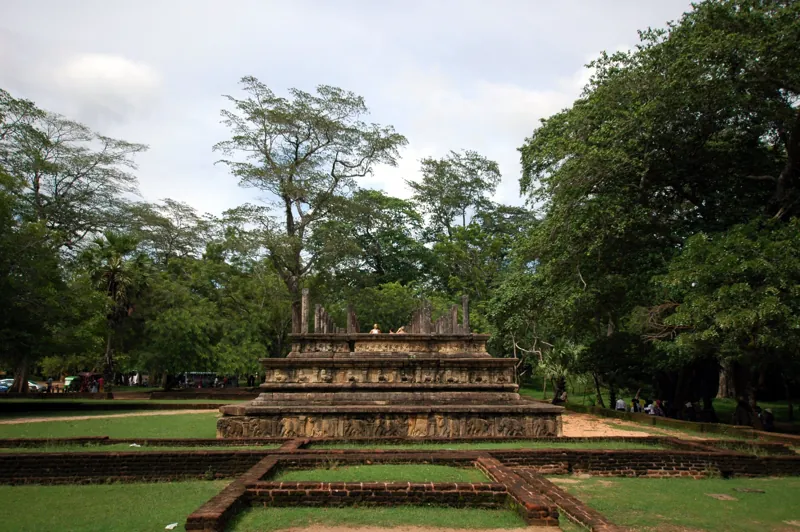
Polonnaruwa was the island's capital in the eleventh and twelfth centuries. Its ruins are remarkably intact: a royal palace, council halls, and the serene rock-cut Buddhas of Gal Vihara, all spread beside a vast ancient reservoir.
History
Polonnaruwa became the capital after South Indian Chola invaders sacked Anuradhapura at the end of the tenth century. King Vijayabahu I drove the Cholas out in the late eleventh century and kept the city as his seat.
The city reached its height under King Parakramabahu I in the twelfth century. He built palaces, monasteries, parks and the huge Parakrama Samudra ('Sea of Parakrama') reservoir, which still irrigates the region. Invasions in the thirteenth century brought decline, and the jungle covered the city until archaeologists uncovered it. UNESCO listed it in 1982.
Culture & meaning
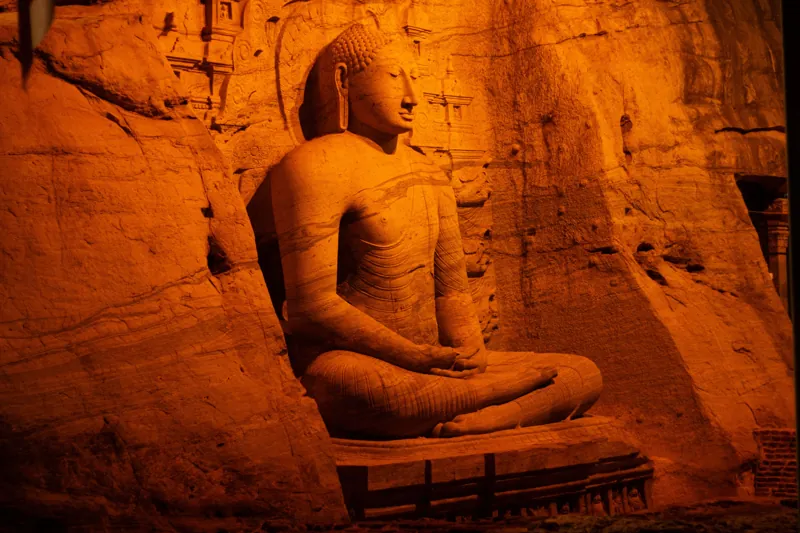
The Gal Vihara is the highlight. It is a row of four Buddha figures carved from a single granite face, including a reclining Buddha about 14 metres long. Its calm expression is considered a masterpiece of Sinhalese sculpture.
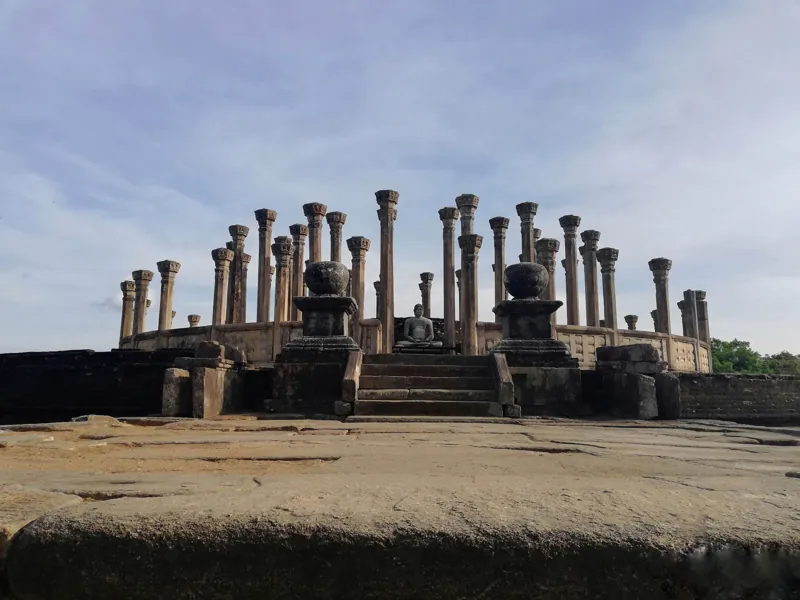
In the Sacred Quadrangle you will find the circular Vatadage relic house, guarded by moonstones and guardstones. Nearby are Hindu shrines to Shiva from the Chola period, a reminder of how Buddhist and Hindu cultures shaped one another.
Travel notes
- Hire a bicycle. The ancient city covers several kilometres of shaded roads and is easy to explore by bike.
- Buy your ticket at the museum first, and visit the museum's scale models before you see the ruins.
- Gal Vihara is a place of worship, so don't pose for photos with your back to the Buddha images.