 Plan a journey
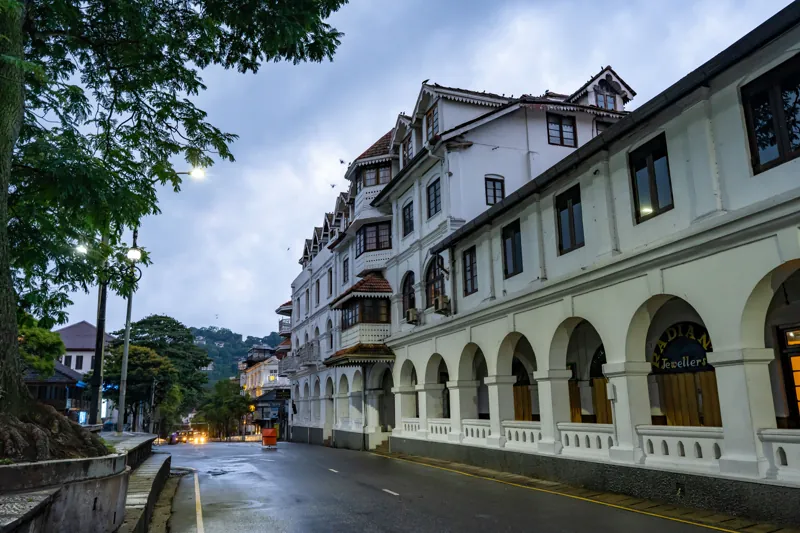
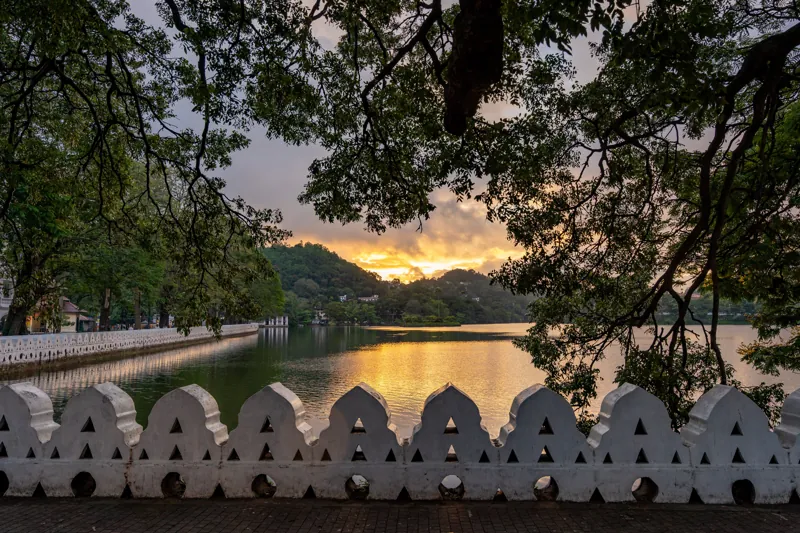
Kandy sits in a bowl of green hills around a tranquil lake. It is Sri Lanka's cultural capital and home to the Temple of the Sacred Tooth Relic, one of the most revered sites in the Buddhist world.
History
Kandy was the seat of the last independent Sinhalese kingdom. Shielded by mountains and dense forest, it held out for more than three centuries against Portuguese and Dutch forces on the coast. It finally came under British rule in 1815, when Kandyan chiefs signed the Kandyan Convention.
The last king, Sri Vikrama Rajasinha, created the lake in the city centre in the early nineteenth century. UNESCO listed the Sacred City of Kandy in 1988.
Culture & meaning
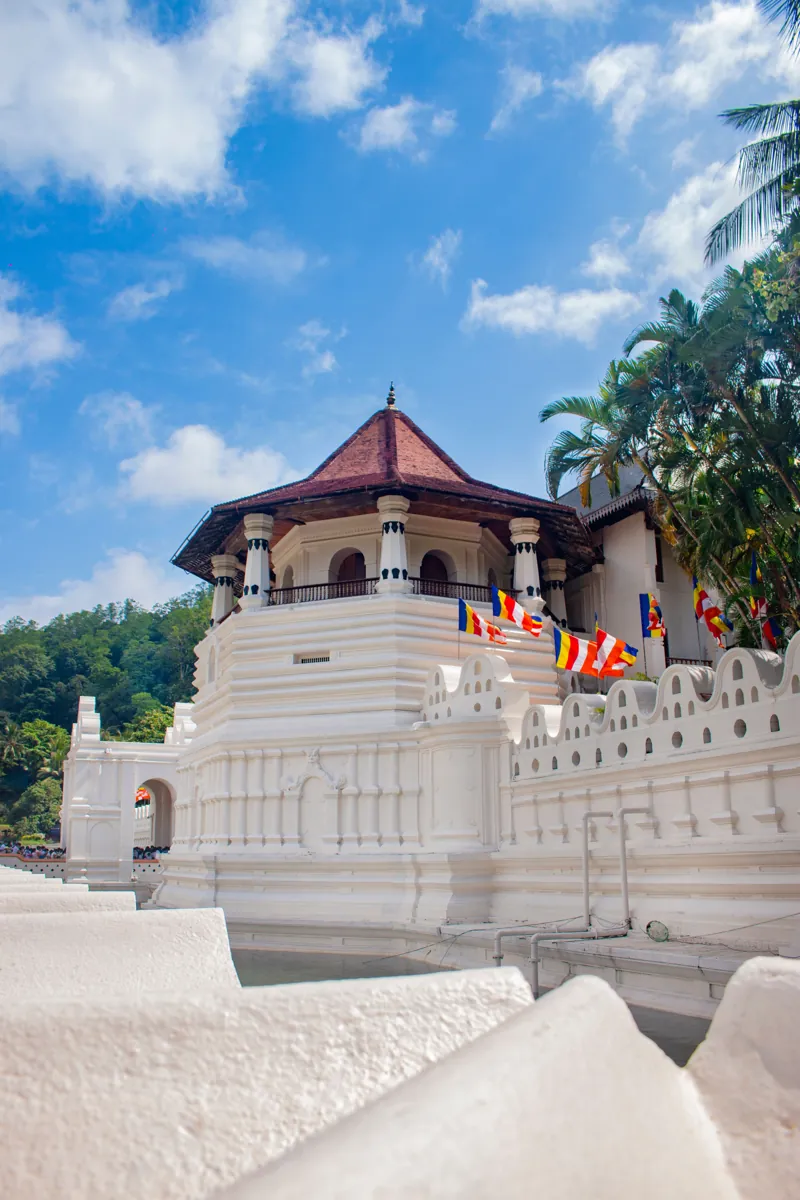
According to tradition, the Buddha's tooth relic was smuggled into Sri Lanka in the fourth century CE, hidden in a princess's hair. Whoever held the relic was believed to have the right to rule, so it moved with each capital until it came to Kandy. Today drummers announce the daily pujas at the Temple of the Tooth (Sri Dalada Maligawa), and worshippers fill the shrine with the scent of jasmine and lotus.
Every July or August the Esala Perahera fills the streets for ten nights. It is a magnificent procession of torch-bearers, whip-crackers, fire dancers, Kandyan drummers and richly decorated elephants. The relic's casket is carried on the back of the lead tusker.
Travel notes
- Attend the evening puja at the Temple of the Tooth (around 6:30pm). Wear white or modest clothing that covers your shoulders and knees.
- Book a seat early for the Esala Perahera. Hotels and grandstand seats fill months ahead.
- Spend a morning at the Royal Botanic Gardens, Peradeniya, 6 km from town, famous for its orchids and giant Javan fig tree.
- Kandy is the classic starting point for the hill-country train to Nanu Oya and Ella.